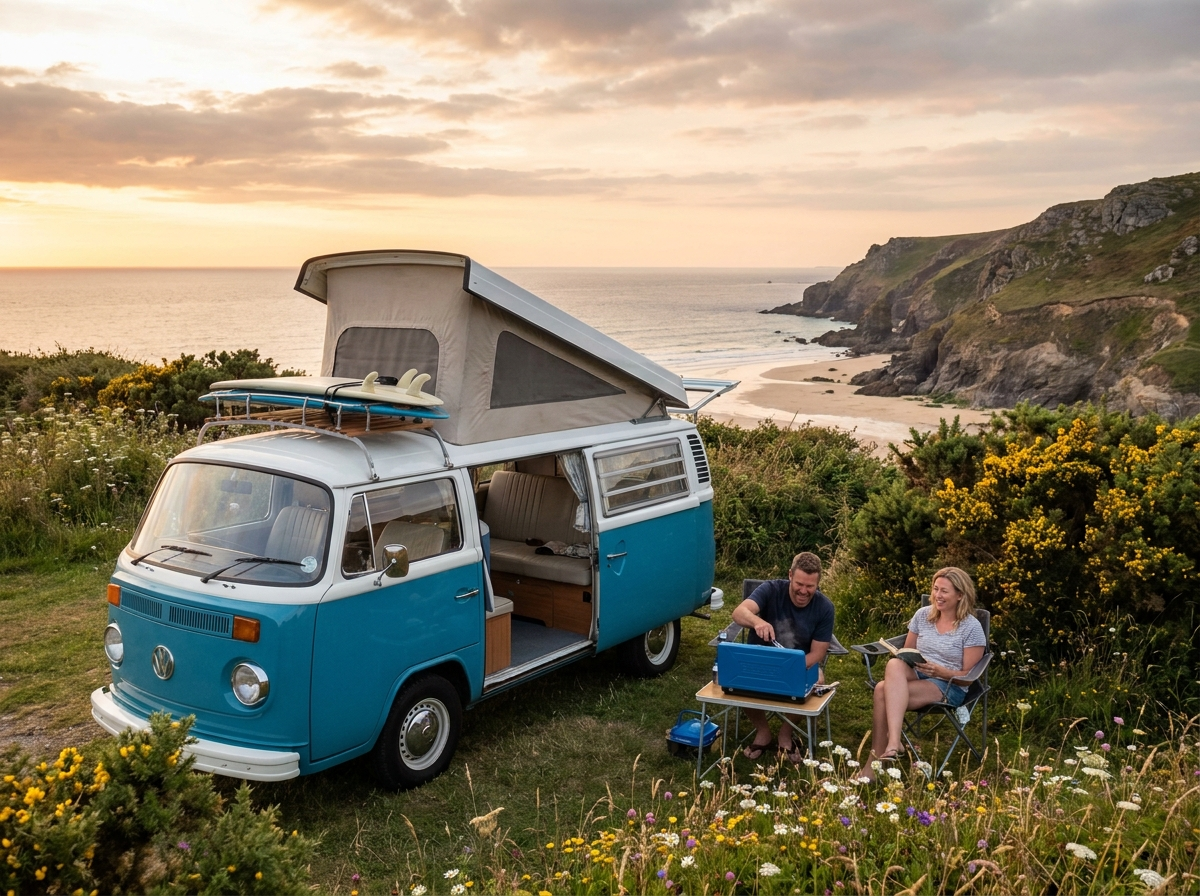
 There is a moment that catches a lot of people out. You hand the keys back at the end of a hire week, drive home in your normal car, and realise you are already thinking about next year. If that sounds familiar, you are in good company. Hiring is how a huge number of UK owners first discovered the lifestyle, and buying a campervan is the natural next step once you know you love it.
The difficulty is that a week away tells you a great deal about how a campervan feels to live in, and very little about how to choose and pay for one of your own. The market is broad, the terminology is unfamiliar, and the prices vary enormously for vehicles that look similar in photographs.
This beginner’s guide walks through what to look for, which features genuinely matter, what a used vehicle should be checked for, and how campervan finance works when the time comes to buy. Take it at your own pace. There is no rush, and getting the decision right matters more than getting it done quickly.
What your hire holiday taught you, and what it did not
A hire vehicle is usually modern, well maintained, sensibly specified and handed over ready to go. That is exactly what you want on holiday, but it hides some of the realities of ownership.
It is still worth mining the experience for information. Think back honestly and ask yourself a few questions.
- Did you use the shower, or did you use site facilities every time?
- Was making up the bed each evening fine, or did it become tiresome by day three?
- Did you feel comfortable on narrow lanes and in car parks, or did the size worry you?
- Were you plugged into a hook up every night, or did you want to stay somewhere quieter?
- What did you keep wishing you had?
Those answers are far more useful than any specification sheet, because they describe how you actually travel rather than how you imagine you might.
Start with how you will really use it
Most first-time buyers benefit from working backwards from their trips rather than forwards from a vehicle they have seen for sale.
Trip length and frequency
Weekend escapes and festival trips reward a compact vehicle you can park easily and use as a second car during the week. Longer touring holidays reward space, a proper washroom and more storage. Very few campervans do both brilliantly, so it helps to be clear about which matters most.
Who is travelling
Two adults have very different needs from a family of four. Pay attention to travelling seats with proper seatbelts rather than sleeping berths alone, because a vehicle that sleeps four does not always carry four legally on the road.
Where you will keep it
This one is often overlooked until after the purchase. Measure your driveway, check the height of any access barriers, and look into local storage sites if parking at home is not realistic. Storage costs and availability can quietly influence which size of vehicle makes sense for you.
Campervan or motorhome? The main types explained
The terminology can be confusing because people use it loosely. In broad terms, these are the categories you will come across.
Panel van conversions
A standard van such as a VW Transporter, Ford Transit Custom or Fiat Ducato converted into living accommodation. The body stays the original van shape, which keeps the vehicle compact and easier to drive and park. Larger panel vans offer surprising amounts of space, sometimes including a fixed bed and washroom.
Coachbuilt motorhomes
Built on a van chassis with a purpose-made living body fitted behind the cab. These offer more interior space, better insulation in many cases and layouts with fixed beds and full washrooms. They are bigger to drive and store, and generally less practical for everyday use.
Pop-top and classic campers
Compact vehicles with an elevating roof that adds standing height and often extra berths. Classic VW campers sit in a category of their own, bought as much for character as for practicality, and they tend to hold their value strongly.
If you are still weighing up which style suits you, our Camper Finder tool asks a short series of lifestyle questions and shows vehicles that match your answers.
The features that actually matter
It is easy to be swayed by a smart interior at a viewing. These are the areas that tend to shape day to day satisfaction.
Layout and beds
A fixed bed means never converting seating in the evening, at the cost of permanent floor space. A rock and roll bed or convertible lounge keeps the vehicle flexible but adds a task to every night. Sit in the vehicle, lie on the bed and move around inside before deciding.
Washroom
A full washroom with a shower is invaluable for wild camping and longer trips, and largely redundant if you always book sites with facilities. Many buyers find a toilet compartment without a shower strikes a sensible balance.
Heating and insulation
If you plan to travel outside high summer, heating turns a fair-weather vehicle into a year-round one. Diesel and gas blown air systems are both common. Ask what is fitted, when it was last serviced and whether it runs from the vehicle fuel tank or a separate gas supply.
Power and off-grid capability
Leisure battery capacity, solar panels and inverters determine how long you can stay away from a hook up. Lithium batteries and larger solar arrays add cost but transform flexibility. If your hire holiday made you want quieter pitches, this is where to spend.
Kitchen and storage
Fridge size, hob configuration, water tank capacity and where the bulky items live all matter. Bikes, chairs, awnings and outdoor kit take up more room than people expect.
New or used?
A new campervan gives you exactly the specification you want, a manufacturer warranty and no history to investigate. It also takes the largest depreciation hit in the early years.
A used vehicle offers considerably more van for the money, and the leisure market holds value comparatively well, which means a well-chosen used campervan can be a sound purchase. The trade-off is that condition varies widely and the responsibility for checking it sits with you.
Both routes can be funded. Finance is available on new and used leisure vehicles, and on vehicles bought from dealers or private sellers, although the arrangements differ.
What to check before you buy a used campervan
Leisure vehicles need a different inspection from a car, because you are buying two things at once. There is a vehicle underneath and a living space on top, and each needs looking at.
- Damp. This is the single biggest issue in the leisure vehicle world. Look for staining, soft patches, bubbling panels and a musty smell, and check around windows, roof vents, lockers and seams. A professional check with a calibrated moisture meter is the only reliable way to be sure.
- Habitation service history. Ask for a recent habitation report. It covers gas, electrics, water and damp levels in the living area, none of which are examined by an MOT.
- Gas system. Check the gas locker is sealed from the living area with a drop vent, that a carbon monoxide alarm is fitted, and that appliances have been checked by a qualified engineer.
- Electrics. Test everything on all available power sources, including 12V, mains hook up and any inverter. Run appliances for long enough to be confident they work properly rather than just switching on.
- Weight and payload. Payload is the difference between what the vehicle weighs empty and its maximum authorised mass. Once you add passengers, water, gas, bikes and gear, a generous-looking payload disappears quickly.
- V5C and documents. Check the vehicle identification number matches, look at how the body type is recorded, and review the service history. Campervans often cover low mileage and sit unused, which brings its own wear.
- Tyres. Check the date codes as well as the tread. Leisure vehicle tyres frequently perish with age long before they wear out.
- Conversion quality. On a converted van, look at how the cabinetry is finished, whether doors and drawers align, and how the ventilation has been handled. Neat work usually indicates careful work elsewhere.
If any of this feels daunting, a professional pre-purchase inspection is money well spent on a purchase of this size.
Weight, size and your driving licence
Vehicle weight affects which licence you need, and the rules depend on when you passed your test. Rather than working from a rule of thumb, check your own entitlement and the current requirements on the GOV.UK driving licence categories page before committing to a particular vehicle. It takes a couple of minutes and avoids an expensive misunderstanding.
The running costs to budget for
The purchase price is only part of the picture. Building a realistic annual budget before you buy makes ownership far more relaxed.
- Specialist leisure vehicle insurance
- Vehicle tax and MOT
- Mechanical servicing and an annual habitation check
- Storage, if the vehicle will not live at home
- Breakdown cover suitable for the size and weight of the vehicle
- Site fees, fuel and the occasional repair
Insurance in particular is worth researching early, since converted vehicles and self-builds are not covered by every provider.
How to finance your first campervan
Most people buying their first campervan use some form of finance, and there is nothing unusual about that. Spreading the cost can mean keeping savings intact for the trips themselves, or choosing a better vehicle than an immediate cash purchase would allow.
Hire purchase
A hire purchase agreement is secured against the vehicle itself. You pay a deposit, then fixed monthly payments over an agreed term, and ownership transfers to you once the final payment is made. Because the agreement is secured, it is often available over longer terms, which can make monthly payments more manageable on a higher value vehicle.
Unsecured personal loan
An unsecured loan is not tied to the vehicle, so you own it outright from day one. This can suit private purchases and older vehicles, although loan amounts and terms are typically more limited.
Which route suits you depends on the vehicle, the amount you are borrowing, how long you want the agreement to run and your own circumstances. There is no single right answer, and it is worth talking it through rather than guessing.
Deposit and term
A larger deposit reduces the amount borrowed and therefore the total cost of the agreement. A longer term lowers the monthly payment but increases the overall amount repaid. Balancing the two against a monthly figure you are comfortable with is one of the most useful things you can do before you start viewing vehicles.
Sort your finance before you shop
This is the tip most first-time buyers wish they had heard sooner. Knowing what you can borrow before you start looking means you can search within a realistic range, negotiate with confidence and move quickly when the right vehicle appears. Good used campervans, particularly at the popular end of the market, do not tend to sit around for long.
How Pegasus Finance can help
Pegasus Finance is a specialist leisure vehicle finance broker, not a lender. That means we work on your behalf rather than trying to fit you into one lender’s criteria. Your own dedicated advisor listens to understand your exact circumstances, explains the options in plain English and speaks to lenders personally so they understand your situation properly.
Our service is free to use with no obligation, and we can arrange finance on a wide range of leisure vehicles, including conversions and older vehicles that some lenders will not consider. If you would rather talk it through with a person than fill in another online form, that is exactly what we are here for.
Your own adventures, on your own terms
Hiring a campervan showed you what the lifestyle feels like. Owning one lets you take it whenever you want, set it up the way you like and stop planning around availability and drop-off times.
Take your time, be honest about how you will really use it, check any used vehicle thoroughly and get your finance sorted early. Do those four things and you will be in a strong position when the right vehicle comes along.
When you are ready to look at your options, our team is here to help you get the confidence to fund the vehicle you have always wanted.
Finance is subject to status and affordability. Terms and conditions apply.