 As the clocks go back and the first frosts arrive, it is time to think about how to prepare your campervan for winter. Whether you are tucking it away on the driveway until spring or planning a few crisp weekends away, a little preparation now protects your van from frozen pipes, damp, flat batteries and costly repairs.
Campervans have their own quirks compared with larger motorhomes. Water tanks are smaller and often mounted underneath, batteries are tucked under seats, and pop-top roofs need extra care. This guide walks you through everything you need to winterise a campervan properly, step by step.
At Pegasus Finance, our team spends every day talking to campervan owners. We know how much your van means to you, so we have put together the checklist we would want for our own. If you own a larger coachbuilt, you may also find our guide to winterising a motorhome useful.
Will You Store It or Use It This Winter?
The first decision shapes everything else. Some owners lay their campervan up from October to March. Others love winter touring, with quieter sites, cosy evenings and frosty morning walks.
If you are storing your van, the priority is protecting it while it sits still. If you are using it, the focus shifts to keeping you warm, safe and dry on the road. Many owners do a bit of both, so this guide covers each in turn.
Campervan Winter Storage Checklist
If your campervan is going into hibernation, work through these steps in order. Most owners find the whole job takes an afternoon.
1. Drain Down the Campervan Water System
This is the single most important step when you winterise a campervan. Water left in tanks, pipes or the boiler can freeze, expand and crack fittings. You often will not discover the damage until you fill up in spring and find a leak under the floor.
- Empty the fresh water tank completely. On many campervans this is an underslung tank with a drain tap, so check underneath.
- Empty the grey waste tank, but only where you are allowed to. Never drain waste water onto the road or a public car park.
- Drain the water heater or boiler. Many have a yellow frost protection or drain valve, often found near the heater itself.
- Open every tap, including the shower, and set mixer taps to the middle position so both hot and cold lines can drain.
- Remove any inline water filter, as trapped water can crack the housing.
- Empty the toilet cassette and flush tank, then clean the cassette and leave the blade valve slightly open.
A handy trick is to blow through the system once it has drained. Some owners fit a balloon over the tap or use a low pressure air pump to push out stubborn water from the lines. Leave the taps open over winter so any remaining water has room to expand.
2. Look After Your Leisure Battery and Starter Battery
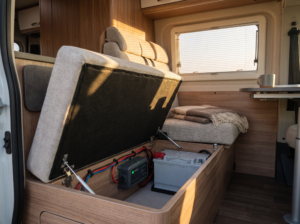 Cold weather and long periods of inactivity are hard on batteries. Even when nothing is switched on, small devices such as alarms, trackers and clocks slowly draw power. A deeply discharged battery can be permanently damaged.
- Fully charge the leisure battery before storage.
- Either connect a regulated battery maintainer designed to stay on charge, or disconnect the battery and top it up every few weeks.
- If your van has solar panels, check the controller is working and the panel is not covered.
- Remember the vehicle starter battery too. It needs the same attention.
- Before disconnecting anything, check whether your alarm or tracker runs from that battery, as you may want it to stay live.
If you have a lithium leisure battery, follow the manufacturer’s storage guidance, as recommended charge levels and cold weather charging limits can differ from traditional lead acid batteries.
3. Turn Off and Check the Gas
- Turn the gas off at the cylinder and disconnect the regulator hose.
- Check hoses for cracks or perishing, and note any replacements needed before spring.
- Check your storage site’s rules on gas cylinders, as some require them to be removed.
- Keep cylinders upright in a well ventilated space if you take them out of the van.
4. Deep Clean and Ventilate the Interior
 Damp and mould are the most common winter problems in campervans. The smaller living space means condensation builds up quickly, and soft furnishings soak it up.
- Remove all food, including tins and anything in cupboards that might attract mice.
- Clean the fridge, prop the door open and leave the cooling vents clear.
- Take home bedding, cushions and clothing if you can, or stand cushions on their edges to let air circulate.
- Leave cupboard doors and drawers slightly open.
- Place moisture traps around the van and empty them on each visit.
- Keep fixed ventilation clear. Never block safety vents, even in storage.
5. Care for a Pop-Top or Elevating Roof
If your campervan has a pop-top, the canvas or fabric bellows need special attention. Folding the roof down while it is wet is one of the quickest routes to mildew and staining.
- Raise the roof on a dry day and make sure the fabric is completely dry before closing.
- Clean off bird droppings, tree sap and dirt from the canvas and roof seals.
- Check the roof seals for splits and the hinges for wear.
- If you can, raise the roof on a dry, mild day every month or so to air it out.
6. Protect the Exterior
- Wash the van thoroughly, including the roof, wheel arches and underside where road salt collects.
- Apply a coat of wax or protective polish to help shield the paintwork.
- Check window seals, roof lights, vents and any sealant around fittings for cracks where water could get in.
- Lubricate door hinges, locks and sliding door runners.
Should I Cover My Campervan in Winter?
A cover can help keep off leaves, green algae and grime, which is especially useful if you park under trees. The key is to choose a breathable cover designed for vehicles. A non breathable sheet traps moisture against the bodywork and can make damp worse. Make sure it fits well, as a loose cover can flap and rub the paint in strong winds.
If your van has solar panels, remember that a full cover will stop them charging the battery.
7. Tyres, Engine and Mechanical Checks
- Inflate tyres to the recommended pressure for your vehicle’s load, as they lose pressure in the cold.
- Move the van a short distance every few weeks to help prevent flat spots, or consider tyre savers.
- Check the coolant has the correct level of antifreeze for your engine.
- Top up the screenwash with a winter mix.
- Fill the fuel tank to reduce the air space where condensation can form.
- If you can, leave the handbrake off and chock the wheels on level ground to stop the brakes seizing. Only do this where it is safe and the van cannot roll.
8. Security
Winter is a popular time for thieves, as stored vans can go unchecked for weeks. Use a steering lock, wheel clamp or both, keep any alarm and tracker active, and remove valuables. If your van is stored away from home, try to visit regularly. A quick check every few weeks lets you air the van, empty moisture traps and spot problems early.
Where to Store Your Campervan Over Winter
Many campervan owners have an advantage here. Because most campervans are similar in size to a large van, they often fit on a driveway, which makes regular checks much easier.
- On your driveway: convenient for charging and airing, but check any local rules or covenants that apply to your property.
- In a garage: great protection from the weather, but garages still get cold enough to freeze water, so drain down regardless.
- At a dedicated storage site: often more secure, and some insurers offer better terms for approved sites. Check access times so you can still visit.
Insurance, Tax and SORN Over Winter
If you will not be driving your campervan at all, you may be thinking about declaring it off the road with a Statutory Off Road Notification (SORN). This can save on vehicle tax, but there are a few things to weigh up first.
A SORN vehicle cannot be driven or parked on a public road, so it needs to be kept on private land. For the current rules and how to apply, visit GOV.UK’s SORN guidance.
Think carefully before cancelling your insurance. Even while stored, your van can still be stolen, damaged by fire or hit by a falling tree. Many owners keep their policy running, or ask their insurer about cover suited to storage. You can also explore our campervan insurance options.
If your campervan is on a finance agreement, check your agreement terms before making any changes to your insurance. Many finance agreements require the vehicle to remain insured throughout, and your monthly repayments continue as normal whether the van is being used or not.
Using Your Campervan in Winter
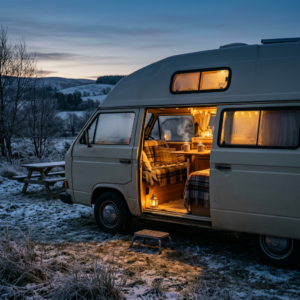 If you plan to keep touring, winter campervan trips can be wonderful. Sites are quieter, and there is something special about a hot drink in a warm van while the frost settles outside. A little extra preparation makes all the difference.
Keeping Your Campervan Warm
- Get your heater serviced before the cold sets in, whether it is gas or diesel.
- Test your carbon monoxide alarm and smoke alarm before every trip.
- Fit thermal screens to the windscreen and cab windows, which is where most heat escapes.
- Pack thicker bedding, and use rugs on cold floors.
Managing Condensation
Cooking, breathing and drying wet coats all add moisture to a small space. Crack a roof vent open, use extractor fans when cooking, and wipe windows each morning. Keeping the van warm and ventilated at the same time is the best defence against damp.
Protecting Your Water System on the Road
If temperatures drop below freezing overnight, keep the heating on a low setting to protect the water system. Some owners only fill the fresh tank with what they need, or use bottled water on very cold trips. Drain down again as soon as you get home if the van is going to sit.
Winter Driving Kit
- Check tyre tread and condition, and consider all season or winter tyres if you head to colder or higher areas.
- Carry de-icer, an ice scraper, a torch, a blanket, a shovel and spare warm clothes.
- Keep the fuel tank topped up and a phone charger in the cab.
- Check that winter sites have the facilities you need, as not all stay fully open.
Getting Your Campervan Ready Again in Spring
When the days lengthen, reverse the process. Reconnect and check the batteries, inspect the gas hoses, and sanitise the fresh water system before filling up. Check the tyres and lights, and look for any signs of damp or rodent damage.
Spring is also a good time to book your habitation service, so any issues are found before your first big trip of the year.
Campervan Winterising: Frequently Asked Questions
How long does it take to winterise a campervan?
For most campervans, an afternoon is enough to drain down, clean, sort the batteries and secure the van. Larger or more complex vans may take a little longer.
Should I remove the leisure battery from my campervan for winter?
You do not have to remove it, but it does need looking after. Either keep it on a regulated maintainer or disconnect it and charge it every few weeks. If you cannot do either easily, removing it and storing it somewhere dry makes regular charging simpler.
Do I need to winterise my campervan if it is in a garage?
Yes. Garages can still drop below freezing on a cold night, so draining the water system is still worthwhile.
Can I use antifreeze in my campervan water system?
In the UK, the usual approach is to drain the system completely rather than add antifreeze to fresh water lines. If you want to use a product in the toilet, check it is approved by the manufacturer first.
Can I leave my campervan on hook-up all winter?
Only if your charger is designed for it. Leaving a basic charger connected for months can overcharge or damage a battery, so check your system’s guidance.
Thinking About Your Next Campervan?
The winter months are when many owners take stock. Perhaps this year showed you need more space, a better heater or a fixed bed, or maybe you are planning to buy your first campervan in time for spring. Autumn and winter can also be a good time to look, as there is often more choice on dealers’ forecourts. You can read more about the end of season buying window in our guide.
If you are considering campervan finance, our friendly team is here to help. You will have your own dedicated personal advisor who listens to understand your exact circumstances and takes the hassle out of finding finance. Our service is free to use, with no obligation, and we can help with a wide range of campervans from dealers across the UK. When you are ready, you can start your application online.
A Little Preparation Goes a Long Way
Preparing your campervan for winter does not need to be complicated. Drain the water, look after the batteries, keep damp at bay and check in on your van regularly. Do that, and it will be ready to go the moment the weather turns, giving you more time to enjoy the great outdoors and make new memories.
If you would like to talk through your next campervan, get in touch with our team. We would love to help.
Finance is subject to status and affordability. Terms and conditions apply. Pegasus Finance is a credit broker, not a lender.