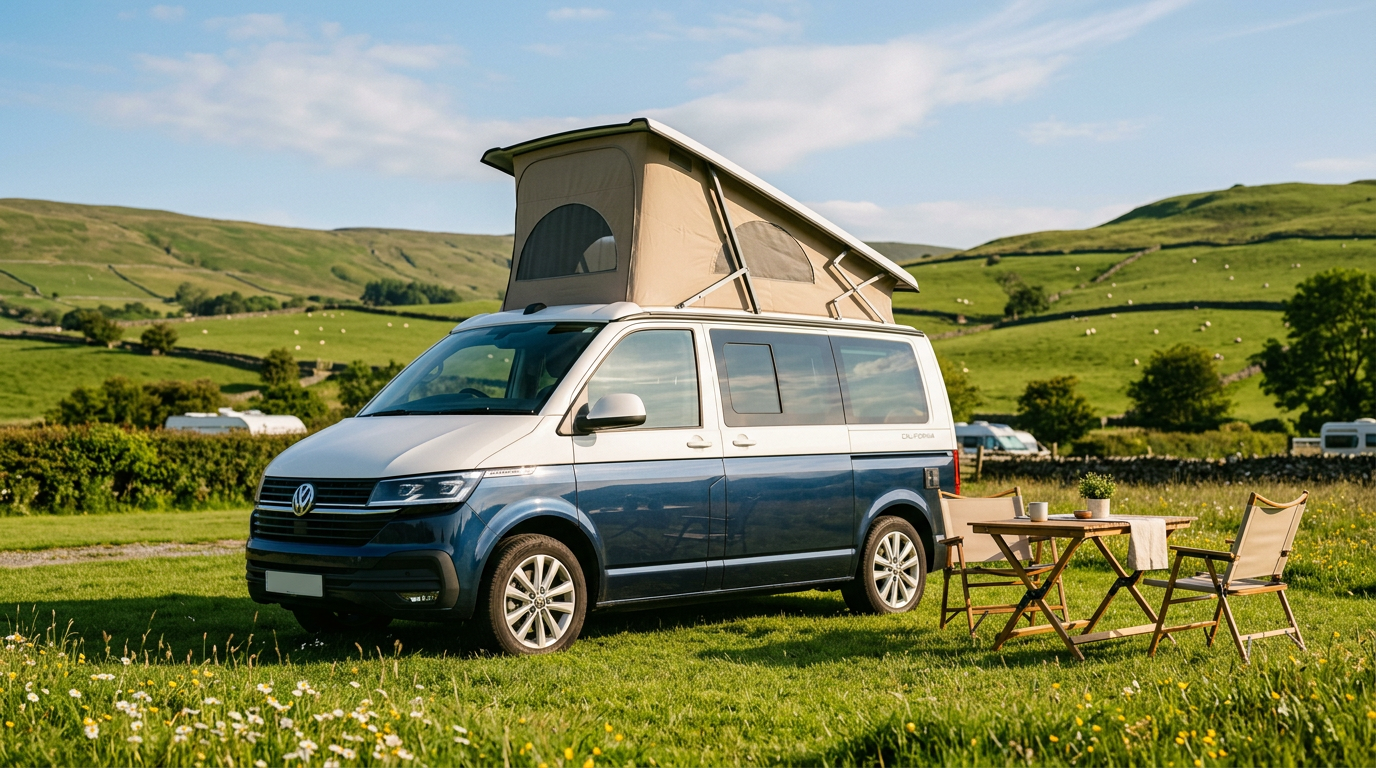
 For years, owners of pop top campervans have been told the same thing by the DVLA: no matter how well your van is converted, it cannot be recorded as a motor caravan on the V5C. That has now changed. On 19th October 2026 the DVLA updated its guidance, and a pop-top elevating roof now counts alongside a high-top roof.
It is a big moment for the campervan community, particularly for owners of popular pop top conversions. But it has also sparked a lively debate online. Is this simply the DVLA listening to owners, or is it the first step towards a new tax on motorhomes and campervans?
In this article we look at what has actually changed, who it helps, and whether the “tax trap” theory stands up. As a specialist campervan and motorhome finance broker, we speak to buyers every day, so we also cover what the change means if you are planning to buy.
What has the DVLA changed?
The DVLA publishes guidance setting out what it expects to see before it will change a vehicle’s body type to “motor caravan”. The updated version, published on 19th October 2026, makes several notable changes.
- Pop top roofs now qualify. Previously the guidance specifically excluded a pop-top elevating roof. The external features list now includes a high-top roof or a pop-top elevating roof.
- Graphics and awning rails are no longer listed. Motor caravan style graphics and an awning bar, two features that caught out many applicants, have been removed from the external features list.
- More vehicles can apply. The old guidance only accepted applications from vehicles with certain existing body types. The DVLA now says it will consider all applications, although some vehicles with a very distinctive original structure may still keep their original body type.
- Rejected applications can be reviewed. If your application was turned down in the past, you can now ask for it to be looked at again under the new guidance.
The internal requirements for a motor caravan have not been relaxed, and photographic evidence is still needed. Criteria can change, so always check the latest DVLA guidance on converting a vehicle into a motor caravan on GOV.UK before you apply.
Why this matters to campervan owners
The body type on your V5C has been a source of frustration for a long time. Many owners of properly converted pop top campers found their vehicles recorded as a “van with side windows” or similar, despite having a bed, kitchen and seating inside.
The DVLA is clear that the body type is used to describe what a vehicle looks like in traffic, for identification purposes. It states that the body type should not affect the insurance category, speed limits or other legislative requirements. Even so, many owners feel that having “motor caravan” on the logbook simply describes their vehicle more accurately, and some insurers, ferry operators and buyers do look at what the V5C says.
Is this good news?
For most people, yes. Here is why.
It removes a long running inconsistency
Pop top campers are some of the most popular leisure vehicles in the UK. Excluding them purely because of the roof type never sat comfortably with owners or professional converters. The new guidance brings the paperwork closer to reality.
It gives rejected applicants a second chance
If you applied in the past and were refused, you now have a route to ask for a review. A review is not a guarantee of approval, but it is a fairer position than before.
It may help when you come to sell
A V5C that clearly describes the vehicle as a motor caravan can make the history of a camper easier for a buyer to understand. Paired with good records of a professional conversion, it can give buyers more confidence.
Is it a trap ahead of a new motorhome tax?
This is the question many owners are asking, and it is a fair one to raise. The timing has not gone unnoticed either, with the Autumn Budget scheduled for 28th October 2026, just days after the change.
Here is a calm look at the facts as they stand.
Body type and tax class are not the same thing
Vehicle tax (VED) is not worked out from the body type line on your V5C. It depends on things like the vehicle’s tax class, revenue weight, type approval and when it was first registered. The DVLA’s own guidance says the body type is about appearance and identification and should not affect legislative requirements. Changing the body type alone should not, on current rules, change what you pay.
The DVLA does not set tax rates
The DVLA collects vehicle tax, but the rates and any new taxes are set by the government through the Budget and Finance Act. A change to identification guidance is a very different thing from a change in tax policy.
There is no published proposal for a new motorhome tax
At the time of writing, we have not seen any official proposal or consultation for a new tax aimed specifically at motorhomes or campervans. That could change in a future Budget, as any tax can, but there is currently no evidence linking this DVLA update to one.
So could it ever be used that way?
In theory, more leisure vehicles being clearly recorded as motor caravans does make that group easier to identify on the register. That is the root of the concern, and it is understandable. In practice, though, any future tax would be just as likely to target tax class, weight or type approval, which the government already holds for every vehicle. Keeping “van” on your logbook would not necessarily keep a camper out of scope.
It is also worth remembering that GOV.UK says you should update your V5C if you change a vehicle’s body type, and it gives converting a van to a motor caravan as an example. Deliberately avoiding an accurate record is not a sensible strategy.
Our view is that, based on what has been published, this looks far more like the DVLA responding to years of feedback from owners and converters than a trap. It is sensible to keep an eye on the Budget and future announcements, and we will update our guidance if anything changes.
What should pop top owners do now?
- Read the updated guidance first. Check your vehicle against the current criteria on GOV.UK before applying.
- Gather good evidence. Clear interior and exterior photos, the completed checklist and a photo of the VIN plate will all be needed.
- Consider a review if you were refused. If your application was rejected under the old rules, the new guidance allows you to ask for a review.
- Speak to your insurer. Let them know about any change to your V5C so your policy stays accurate.
- Keep your conversion records. Invoices and details of who carried out the work are valuable now and when you sell.
Buying a pop top campervan? What to check
If you are shopping for a pop top camper, the rule change is good news, but it does not replace proper checks. Look at what the V5C currently says, ask whether the seller has applied (or plans to apply) for a body type change, and ask for evidence of who carried out the conversion and the pop top fitting.
A professionally converted vehicle with clear paperwork is generally easier to insure, value and, when the time comes, sell. If you are still deciding what kind of camper suits you, our Camper Finder can help narrow things down, and you can browse pop top campervans for sale on Campers4Sale.
How Pegasus Finance can help
Whether the logbook says motor caravan or van with side windows, our team understands how converted campervans are described and valued, and we know the questions to ask. Your dedicated personal advisor will listen to your exact circumstances and help you find finance for the professionally converted pop top camper you have your heart set on. We are unable to fund self-build conversions, and if you are buying privately we may be able to help, so just ask.
Our service is free to use with no obligation, and we handle the forms and the legwork so you can spend more time planning your first trip. Get in touch with our friendly team to talk it through.
The bottom line
The DVLA’s decision to accept pop top roofs is a welcome and overdue change for many campervan owners. On the evidence available, it does not look like a trap, and the body type on your V5C should not, on current rules, change the tax you pay. As with anything involving the government and vehicle tax, it is worth staying informed, and we will keep our readers updated.
If you are thinking about buying a pop top campervan, we would love to help you get on the road and start making memories.
Pegasus Finance is a credit broker, not a lender. Finance is subject to status and affordability. Terms and conditions apply. This article is for general information only and does not constitute financial, legal or tax advice. Information is correct at the time of writing; please check GOV.UK for the latest DVLA guidance.